
The Science of
Gamer Motivation
Uncover what motivates gamers with our unique blend of social science and data science. Based on data from over 2 million players across 4,000+ game titles, our advanced psychometric model reveals what truly drives gaming experiences.
Sign up for our newsletter to keep up to date with our gamer psychology findings and analytics blog posts:
The Science and Data Behind Our Gamer Motivation Model
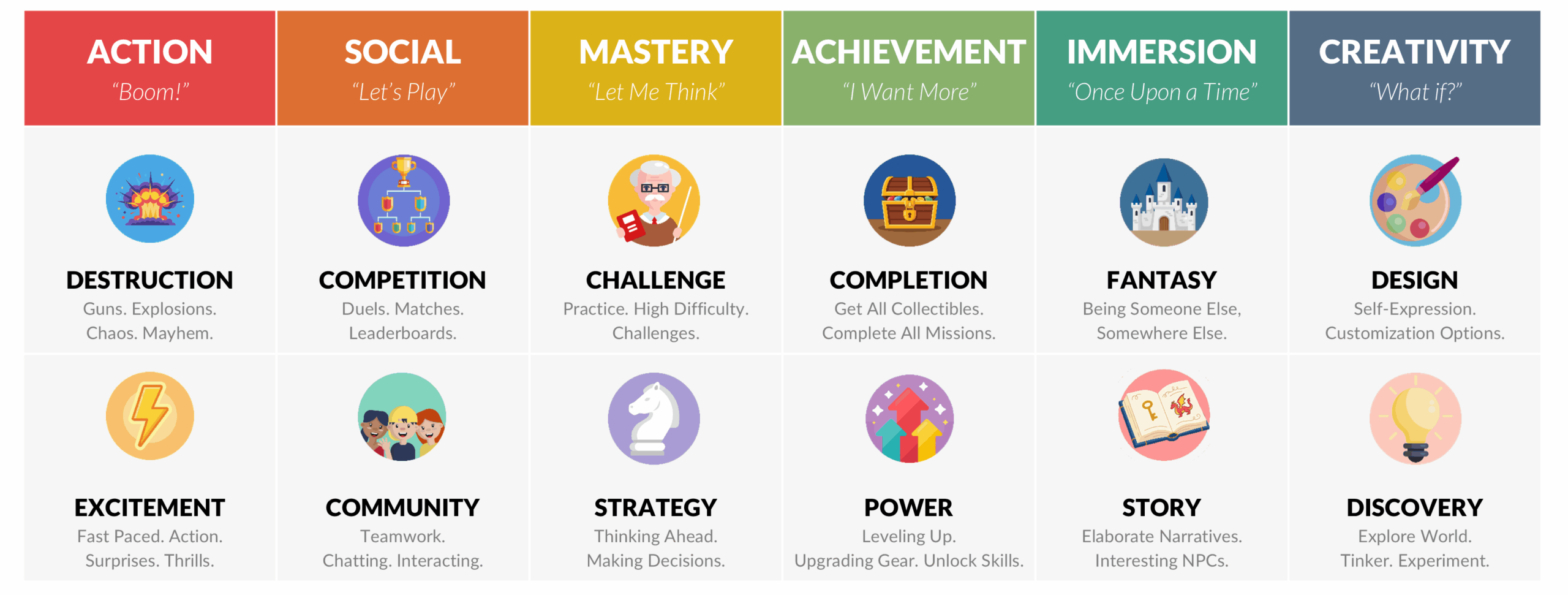
Our Gamer Motivation Model
Data From Over 2 Million Gamers
Our Gamer Motivation Model was built using rigorous psychometric methods and insights from over 2 million gamers. Curious to learn more? Explore our resources:
- Discover Your Profile: Take the Gamer Motivation Profile to get a personalized report and tailored game recommendations.
- Explore the Motivations: Download our detailed PDF reference sheet to explore the 12 gaming motivations.
- Learn The Science Behind It: Check out our 20-minute talk on how the model was created and key insights we uncovered.
- Deepen Your Understanding: Watch our 2019 GDC talk for a comprehensive analysis of the 12 motivations.
What Makes Our Data Different?
Dashboard Access to All Our Audience Data
Game Audience Dashboard
See our new dashboard in action in the video demo below. We walk through all the main reporting and graphing features of the dashboard.
Features At a Glance
- Real-Time Insights: Access a convenient online dashboard powered by live data.
- Extensive Game Catalog: Explore a database of over 4,000 game titles.
- Robust Data Foundation: Built on insights from over 1.75 million gamers worldwide.
- Build Audience Reports: Generate detailed reports for individual or multiple game titles/franchises.
- Advanced Filters: Customize reports by gender, age, gamer type, and other player variables.
- Advanced Query Settings: Apply weighted analysis and game intersection/exclusion settings, all with a quick toggle.
- Dynamic Visualization: Use interactive graphing tools to explore related game titles.
- Reverse Lookups: Identify games that match specific audience or motivation criteria.
Download a PDF overview of the key features.
Data-Driven Insights About Your Audience
Audience Reports
Empower Your Game Production & Marketing with Data-Driven Insights
Whether you’re refining an existing title or developing a new game, our reports and custom services provide actionable audience insights to guide your decisions.

Here’s What Our Clients Are Saying
Clients and Testimonials
Trusted by 200+ Game Publishers and Developers: From small indie studios to AAA franchises, from Match-3 games to MMOs, Quantic Foundry has worked with over 200 game developers and publishers to deliver actionable insights to:
- Identify target audiences for early game concepts.
- Boost player acquisition and retention for live games.
- Surface unmet needs in existing genres and games.
- Prioritize features for games in development.


A team that has been analyzing game data and innovating new ways of understanding gamers for over two decades.
Our Team
Nick Yee and Nicolas Ducheneaut each bring 20+ years of experience studying games and gamers.
Drawing on their extensive backgrounds in academic, commercial, government, and industry research, they transform game data into actionable insights for the gaming industry.


Nick Yee and Nic Ducheneaut bring a unique blend of social science and data science expertise to Quantic Foundry. With PhDs from Stanford University and U.C. Berkeley, respectively, they began their collaboration in 2005 at the Palo Alto Research Center (Xerox PARC). Their groundbreaking work in online gaming—ranging from developing empirical models of gamer motivations to mapping social networks in World of Warcraft—has resulted in over 40 peer-reviewed papers, including Nick Yee’s highly-cited paper on online gaming motivations (cited over 4,000 times).
Seeking to apply these insights and methods directly within the game industry, they joined Ubisoft in 2012 where they founded the Gamer Behavior Research group. Their fluency in different methodological approaches allowed them to combine and derive actionable insights from diverse data sources, which accelerated collaboration between design, marketing, and analytics teams.
In 2015, they launched Quantic Foundry to bring their expertise and insights to the broader gaming industry, helping publishers and developers understand their audiences and make data-driven decisions.